

**This was originally “tweeted” on August 23rd, 2012** A theory is a formal description of nature (meaning, a mathematical frame set with a link to lab stuff) which can make predictions of observations. Verification of these predictions are made through the trials of experiments and comparing what the theory says about its outcomes and whatContinue reading “The Interpretation of a Theory”
Category Archives: science
C H A R G E

According to the way Heisenberg did it, in quantum mechanics, both the position and the momentum come out as probabilities whenever you perform a measurement. The math states that these two probability distributions are Fourier Transforms of each other. Oddly enough, there is a theorem of the Fourier Transforms [of each other] that says theContinue reading “C H A R G E”
I Hope I’m Being Coherent And A Little Less Incoherent About Decoherence

First of all, I would like to point out that both randomness and determinism, in the effect of decoherence, are both attributes of theory that are, as a result, developed. Decoherence irreversibly converts quantum behavior (additive probability amplitudes) to more classical behavior (additive probabilities), however, this requires noticing the role of the physicist in theContinue reading “I Hope I’m Being Coherent And A Little Less Incoherent About Decoherence”
Thermodynamics: External vs. Internal, Real vs. Ideal

Has anyone ever had any doubt about the relation between internal and external work in regards to thermodynamics? In consideration of irreversible processes, why is the work done measured by the work done against the external pressure and not the work done by the internal pressure? If the forces or pressures are not balanced theContinue reading “Thermodynamics: External vs. Internal, Real vs. Ideal”
M A R S
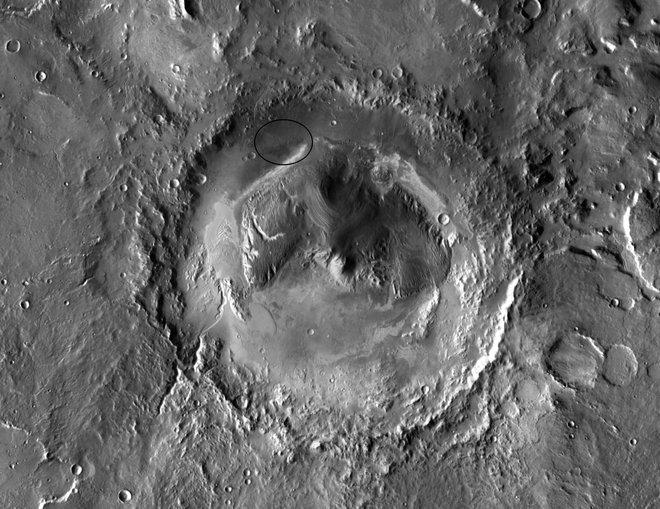
I, for one, was not all that thrilled about the landing of Curiosity on the Red Planet (of course it’s “red” due to a teensy amount of oxygen) last month nor am I ecstatic about NASA’s plans to send yet another robot to Mars for “drilling” purportedly in 2016. I, especially, object to the ideaContinue reading “M A R S”
Re-examining Scientific “Expertise” and the Purpose of Peer Review
There’s a quote from the book, Rethinking Expertise: “…people who have this kind of expertise share some of the tacit knowledge of the communities of practitioners while still not having the full set of skills that would allow them to make original contributions to the field…” For most practicing scientists [and engineers], they tend toContinue reading “Re-examining Scientific “Expertise” and the Purpose of Peer Review”
Is The Wavelength The “Size” of The Photon Particle?

The wavelength of a photon particle is perfectly well-defined but only when it’s in a momentum eigenstate (i.e., when it has perfectly well-defined momentum–and energy). However, this never happens since a photon is always in a superposition of momentum eigenstates: Perhaps, the quantity that we might want to consider as the “size” of a photonContinue reading “Is The Wavelength The “Size” of The Photon Particle?”
The Consequences of Popularizing Science
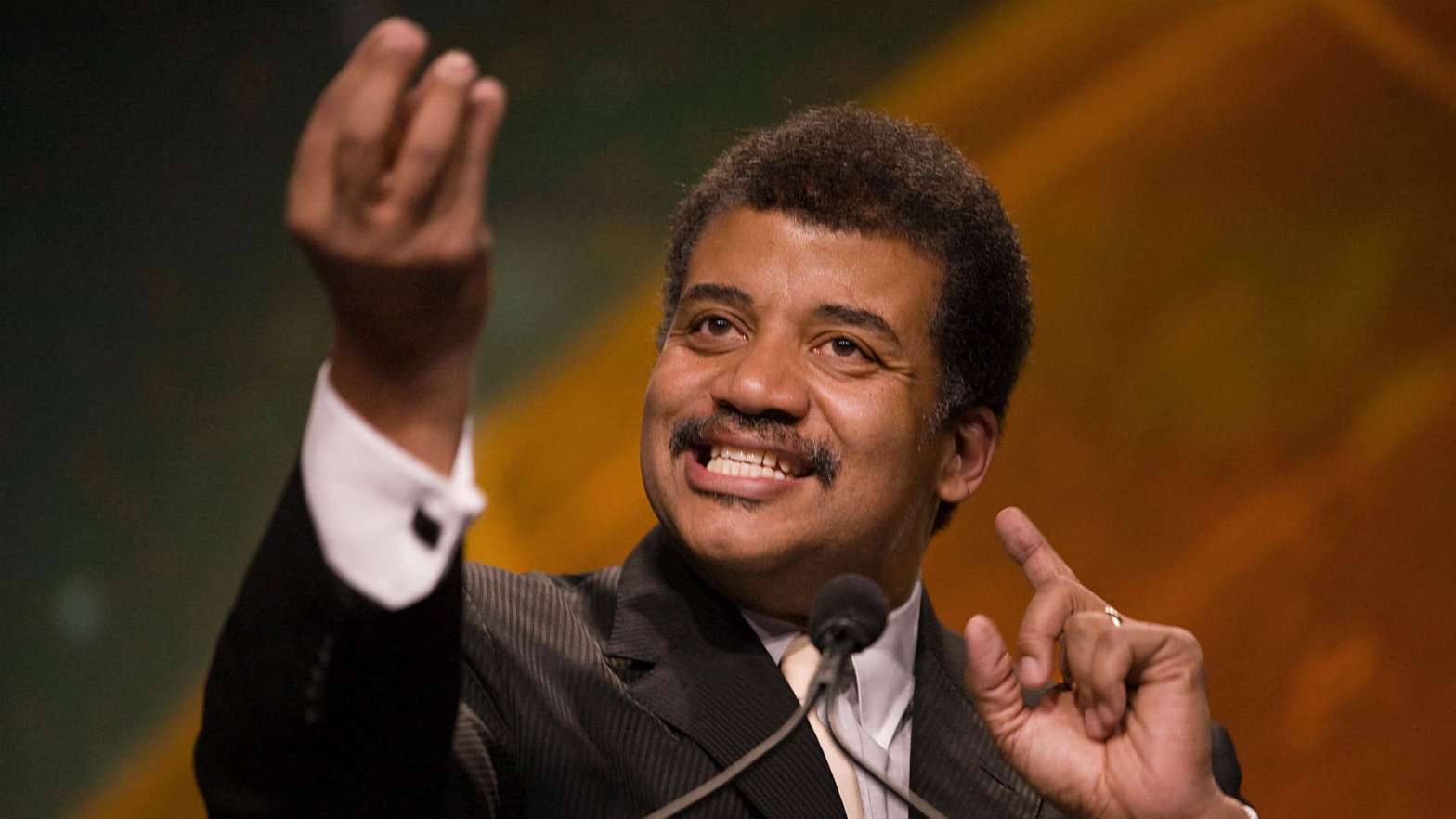
I fail to see the fascination over the likes of Carl Sagan, Michio Kaku, Neil Degrasse Tyson, Bill Nye, “The Science Guy”, David Keith and others of that ilk. Thinking back, years ago, when I was attending college, I had a professor who, himself, believed that “popular science” was the result of the decentralization ofContinue reading “The Consequences of Popularizing Science”
Just How Good Is The Copenhagen Interpretation?

In respect to cosmology, some would say that the Copenhagen Interpretation isn’t good due to the fact that there is no outside [classical] observer. So, how would you generalize quantum mechanics in a way that you can deal with cosmology as a whole and not just in a limited region? The best attempt, in thisContinue reading “Just How Good Is The Copenhagen Interpretation?”
First, There’s The Experiment, And Then There’s The Outcome…(Quantum Physics)

In most cases, there is always a large amount or “randomness” involved in experiments such as EPR-Bell experiments when getting the final outcome. For instance, the angle is random and should be set in the very last moment (i.e., outside A’s light-cone) to do it properly. And, depending on the relative angle [a-b], you getContinue reading “First, There’s The Experiment, And Then There’s The Outcome…(Quantum Physics)”
 arheliean.com